Texas Department of Transportation
Published in Texas Highways December 18, 2025November through March is a popular time to fly-fish for trout in the Guadalupe River.
Trout fishing in America usually means wading in a swift-running river somewhere in the Rockies on a sunny summer day.
But from November through March, trout fishing in America is all about Texas. This is the time of year when the Texas Parks & Wildlife Department releases more than 300,000 young rainbow trout into Texas rivers, lakes, and streams. It’s an exceptionally popular program among anglers during the otherwise dormant winter season, when Texas waters are uniquely positioned to host the prized freshwater game fish.
TPWD releases more than 18,000 rainbow trout into the tailrace below Canyon Dam on the Lower Guadalupe River every year. The Guadalupe River chapter of Trout Unlimited augments that stocking on the Lower Guad with an additional 11,500 larger rainbows.
What’s so special about the trailrace of the Lower Guadalupe?
The water coming off the bottom of Canyon Dam—about 60 degrees Fahrenheit—is cold enough to sustain trout throughout the year—the only body of water in the state that can do so. Welcome to the southernmost trout fishery in the United States.
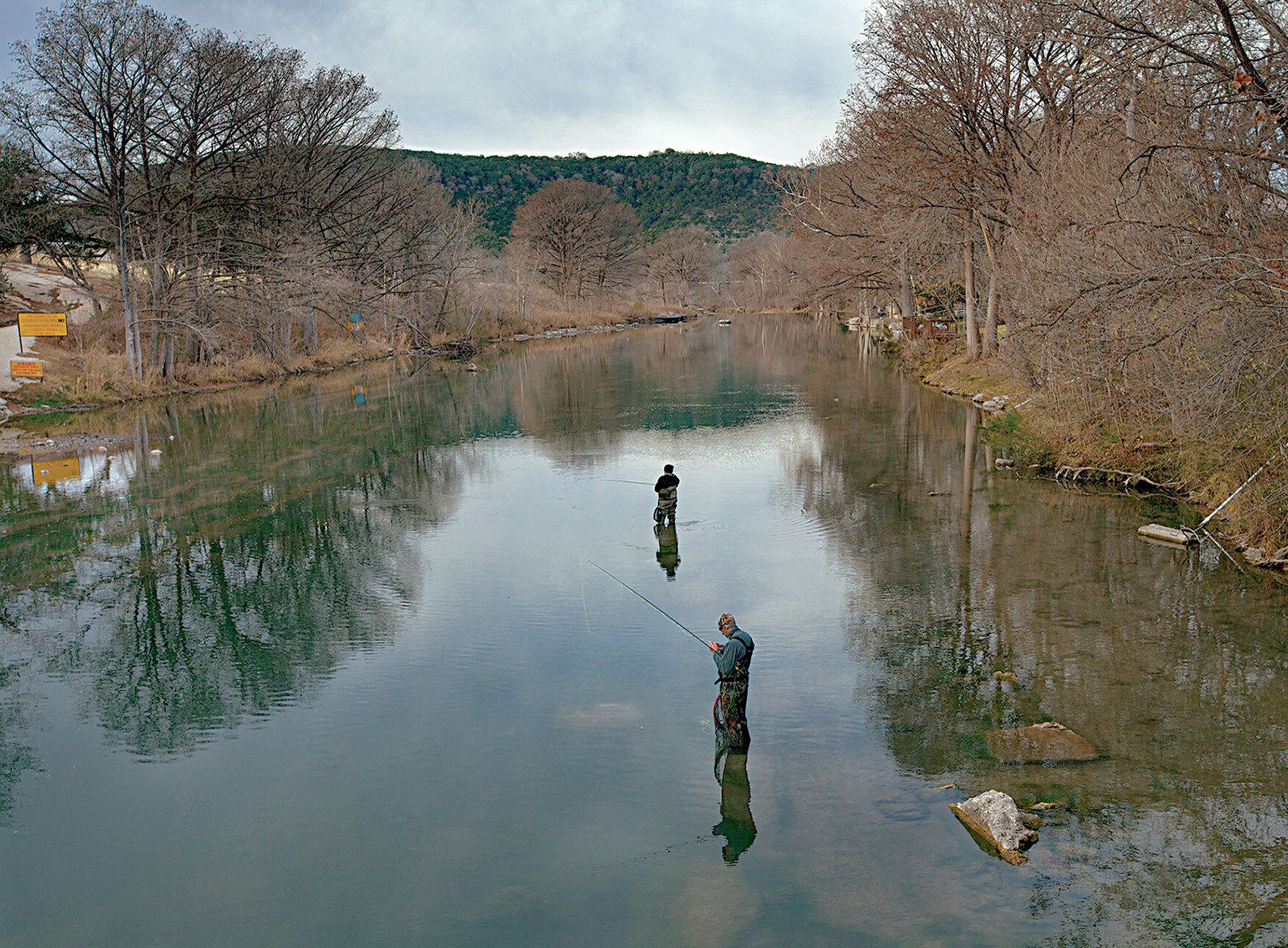
On a chilly morning early last December, I tagged along with John Moore of Wimberley and his friend Jack Driskill of San Antonio on the Lower Guadalupe River near New Braunfels in search of trout. With air temperatures in the 40s, the river was calm and relatively clear. It was also missing the turbidity that tends to stir up during what the fishermen jokingly refer to as “tube hatch season,” when beer-chugging floaters clog the river. The cypress on the riverbanks were in the last throes of their seasonal turn, their leaves burnished a golden brown. It was quiet. Except for the occasional car or motorcycle passing by on River Road, Carolina wren and northern cardinal chirped out a calming soundtrack.
Moore and Driskill meet on the river at least once a week during winter months to fly-fish and tell stories in the morning, and have an excuse to go to lunch afterward. Both are members of Guadalupe River Trout Unlimited, the largest such chapter in the world with a membership of 5,500. The group’s size is testament to the Lower Guadalupe’s status as the only river in Texas to sustain a year-round trout fishery, and to the river’s location, a four-hour or shorter drive for close to 10 million Texans.
We parked at lease No. 5 by Meckel’s Landing at Rocky Beach on River Road near New Braunfels, not quite 10 river miles downstream from Canyon Dam. Moore and Driskill each paid $200 for one of about 750 permits awarded through a lottery held the previous summer to gain access to private property on the river. As part of the program, Moore and Driskill practice catch-and-release, although other anglers may keep the trout they catch.
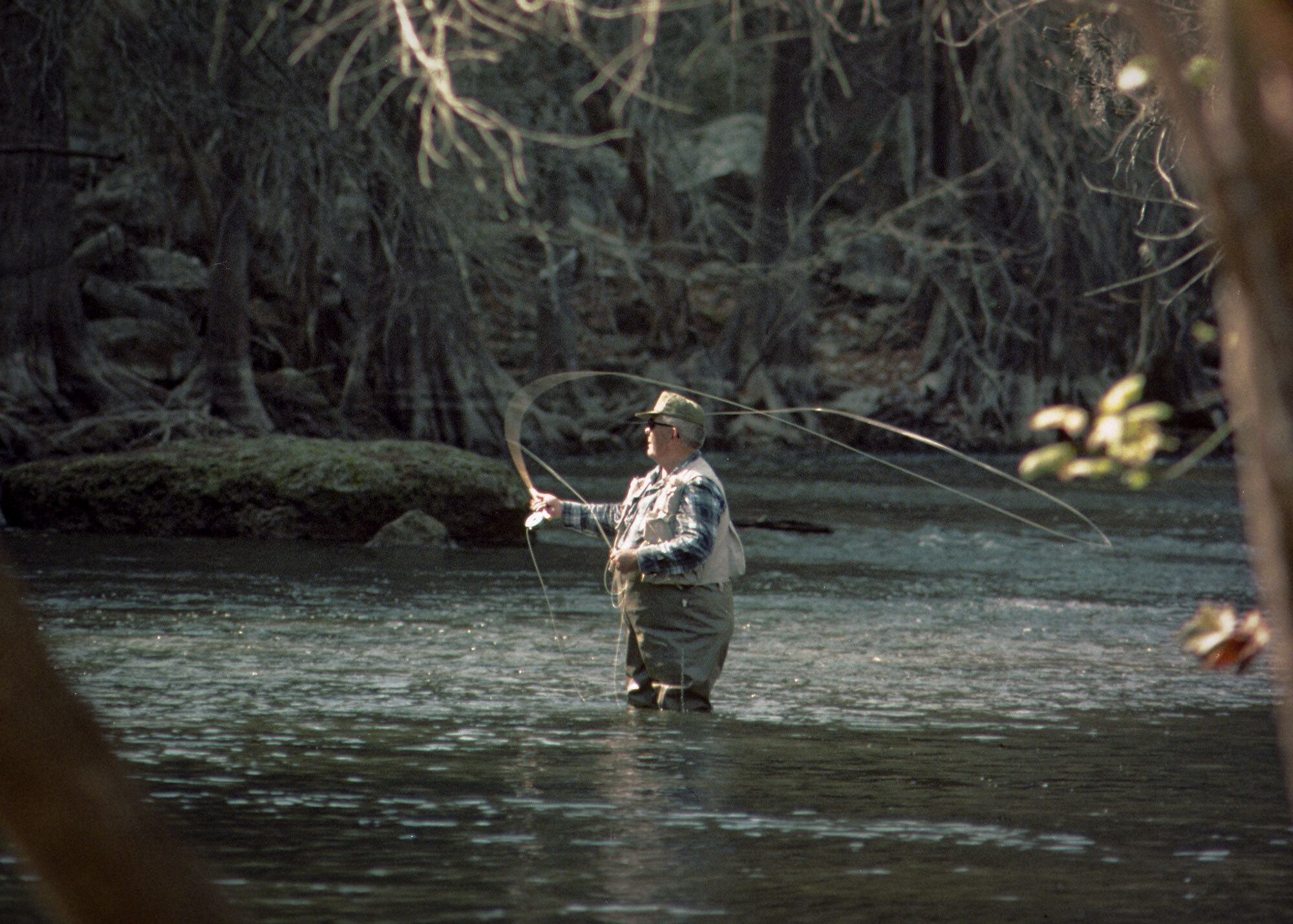
Bob Parvin/Texas Department of Transportation
Texas Parks & Wildlife and the Guadalupe River chapter of Trout Unlimited release almost 30,000 trout into the river every winter
After parking, we walked about a quarter mile along River Road to a spot where we could scurry down the riverbank and, after putting on fishing waders to keep us dry, into the water.
This is a different kind of trout fishing, Driskill explained as he prepared to cast. The water tends to be shallower out west, so you usually drop the fly atop the water.
“Here, the trout like to hang in holes where the water’s colder, so I try to drop the fly about half way down,” he said.
He mentioned that the biggest competition on the water, beside other fishermen, are ospreys.
“When the water’s clear like this, and the fish are in shallows, they’re easy pickings for the fish hawks,” he said. “Ospreys don’t work the honey holes, the deep pockets in the rocky river bottom.”
Most of the holdover trout population in the Lower Guadalupe lives in the first seven miles below the dam, said Jimbo Roberts, Guadalupe River Trout Unlimited’s vice president of fisheries. Roberts fishes the Lower Guad just about every week of the year but limits his pursuit of trout to October through May.
“We recommend that all anglers quit fishing for trout when water temperatures reach 68 degrees and the trout are easily stressed,” he said. Only Trout Unlimited members are held to this standard; the public can fish for trout year-round.
Roberts is old enough to have fished the Lower Guadalupe before Canyon Dam was completed in 1966. Back then, he caught mainly bass and perch, and sometimes catfish, carp, and red horse suckers.
“The river has changed greatly in the tailrace portion of the Guadalupe since the dam was built, going from a warm-water fishery to a cool-water fishery,” he said. “The populations of native bass and perch have declined. We now have striped bass and white bass, along with the trout that were not here before.”
Extensive media coverage means that the Lower Guadalupe is now a destination trout fishery.
“It fishes best in our milder winters when most northern fisheries are frozen over or restricted,” Roberts said. “We regularly get anglers from all over the U.S. and now anglers from other countries.”
Back at their potential honey hole, Jack Driskill was fishing with a rubberleg midge, a synthetic precision lure meant to imitate the tiny insect. John Moore was working a rubberleg nymph, a bulkier version. Once cast, the flies sank toward the bottom.
“If I was a fish, I’d eat this,” Moore said.
Not on this day. The flies fooled no one. The trout were not cooperating. Not even a nibble. After about an hour on the water, Moore and Driskill called it a morning and headed to Granny D’s for a plate lunch.
The two may have been skunked in their pursuit of trout, but on this particular winter morning, there wasn’t a better place in Texas, as far as they—and the many who drop lures into the Guadalupe during Texas winters—were concerned.